Children's DD services
Birth through age 17- Self-direction: Family Directed Support Services, with the parent as employer.
- Ends at 18: services do not carry over on their own.
Turning 18 is a big milestone, and in Idaho it also means a fresh adult application, not an automatic renewal. Here is a calm, plain-language map for Treasure Valley families and case managers, with every fact linked to its source.
When a young Idahoan turns 18, the services that supported them as a child do not simply roll over. This guide walks Treasure Valley families and case managers through the whole handoff, in order, with every fact linked to an Idaho or federal source.
It follows the Morales family in the year before Sofia turns 18. Sofia lives at home with her parents, Rosa and Miguel. No DSP works in their house. A home of Sofia's own, with a roommate named Jenna and a DSP named Andre, is a someday picture you will see at the end.

1 One year out
Sofia's 17th birthday
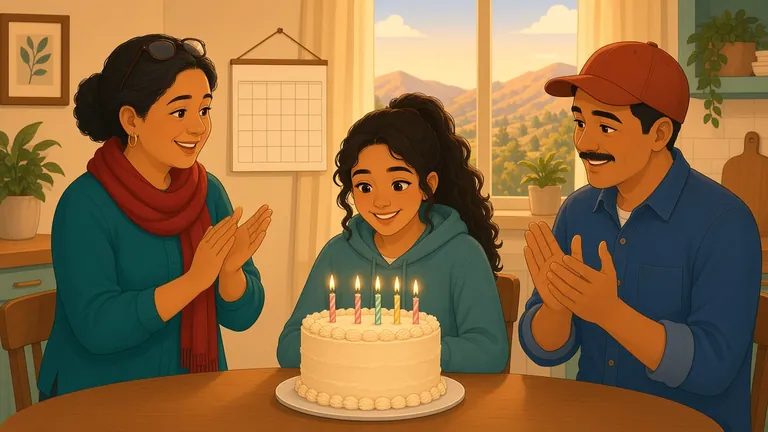
Sofia blows out her candles at the kitchen table. Rosa claps, then glances at the calendar. Next year Sofia turns 18, and the children's services she has today will not simply roll over.
The whole path
From children's services to adult services
Seven steps, in the order most families take them.
Start planning with your regional BDDS office
Well before the application window, contact your regional Bureau of Developmental Disability Services office to ask questions, and ask the Children's DD program about transition trainings and the Road to Adulthood Guide. Planning early lets you take smaller, calmer steps.
Apply for adult Medicaid and line up SSI
At 18 the young adult is their own household, so parental income no longer counts. Apply for adult Medicaid first, and call SSA about 30 days before the birthday to schedule an SSI appointment, since SSI helps pay room and board and supports Medicaid financial eligibility.
Submit the adult DD application in the final three months
Send the Eligibility Application, a History and Physical from the last 365 days, the privacy and disclosure forms, and proof the disability was identified before age 22 to your regional BDDS office. Do not apply more than three months before the 18th birthday, and only after adult Medicaid is in place.
Complete the independent assessment
Idaho's independent assessment contractor (Liberty Healthcare) schedules an in-person eligibility and level-of-care assessment and calculates the annual budget. Bring two respondents who know the young adult well. If you disagree with the result or the budget, you can appeal.
Choose your planning path and hold the person-centered meeting
Pick Traditional Services (a Service Coordinator writes an ISP) or Self-Direction (My Voice, My Choice, with a Support Broker and the required free training), then build the plan of service in a person-centered planning meeting.
Select a certified Residential Habilitation provider
If Residential Habilitation is in the plan, choose a DHW-certified provider. Idaho's rule allows it in a person's own home, a family home, or a certified family home. GemState supports adults in their own home or apartment, with a DSP in the home 24 hours a day (one DSP for up to 3 participants sharing a home); it is not drop-in or hourly care. Turning 18 does not force an immediate move, so plan the transition at your own pace. Remember that the waiver does not cover room and board.
Set up decision-making supports
Ideally before the birthday, decide whether Supported Decision-Making, a durable power of attorney, or an SSA representative payee is enough, or whether a limited guardianship is truly needed. Choose the least-restrictive option that meets the real need.
Each step links to a section below with its sources. This visual summary does not add requirements beyond those sections.


Side by side
Children's DD and adult DD
Turning 18 starts a new adult application. It is not an automatic continuation.
Same definition on both sides: onset before age 22, with substantial limits in 3 or more of 7 major life areas.
Two honest clarifications. The onset threshold is before age 22, not 18, so a disability that first appears at 19 or 20 can still qualify. And a diagnosis by itself does not qualify anyone. Every eligibility gate below is required, and the final decision belongs to DHW, not to any online tool.
Sources: DHW: Apply for children's DD services; DHW: Apply for adult DD programs; Idaho Code 66-402 (DD definition).
2 Her IEP
Sofia speaks up at school
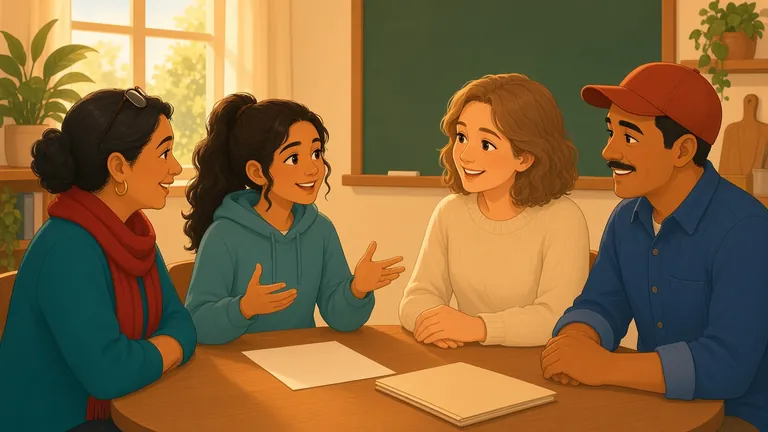
At her IEP meeting, Sofia tells the team what she wants after high school. Rosa and Miguel back her up, and they ask one key question: when will school services end?

Know the difference
Which diploma ends school services?
A regular-diploma graduation is a change of placement, so the school must give prior written notice.
Talk with the IEP team about timing, so school services do not end before adult supports are in place.

Sources: Idaho Special Education Manual (2025 edition, effective July 1, 2026); 34 CFR 300.320 (IEP transition content); 34 CFR 300.102 (graduation and FAPE).
3 Reading ahead
The Road to Adulthood, together
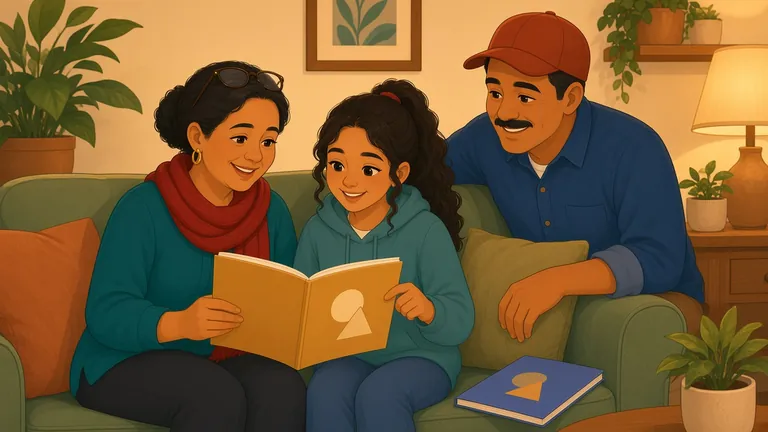
Rosa and Sofia read the Road to Adulthood Guide on the couch, one copy in English and one in Spanish. Miguel leans over to look. They learn the rule that shapes their year: start early, apply late.

Start early, apply late
Planning and applying are two different clocks
A "six months before 18" suggestion in some secondary guides is an informal cue only. The one number in DHW's own guide is the 3-months-before-18 rule.
Bridge options for ages 18 to 21. Ask DHW about EPSDT funding, Children's State Plan Intervention Services for adults 18 to 21 through Developmental Disabilities Agencies, and children's intervention services that can run through the month of the 21st birthday. Katie Beckett Medicaid ends at 19.
No promise of instant services. Idaho's 1915(c) DD Waiver is budget-driven and assessment-driven. We cannot promise immediate services or a "no waitlist" outcome. Confirm current timelines and any waiting list with your regional DHW/BDDS office.
Sources: Idaho DHW/BDDS Road to Transition guide; DHW: Apply for adult DD programs; ICDD/IDHW DD Services Transition Guide.
4 The assessment
Sofia answers for herself
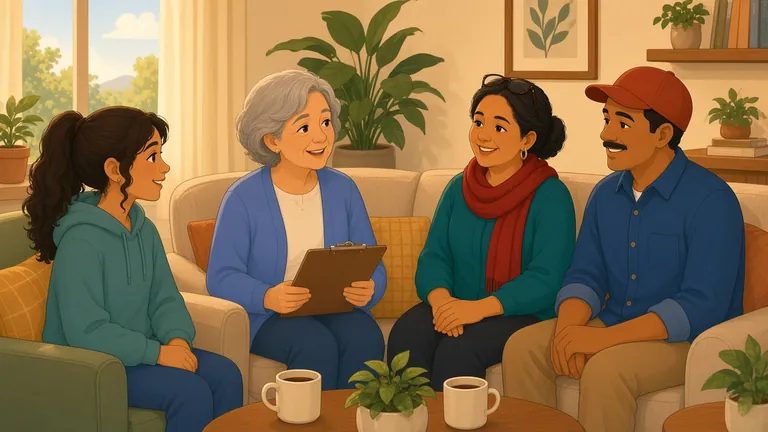
The independent assessor visits. Sofia answers in her own words, and Rosa and Miguel sit nearby as her two respondents, people who know her well. The decision belongs to DHW, not the family.
All four required
The eligibility gates
Meeting one gate, or simply having a diagnosis, is not enough.
The decision is DHW's, and you can appeal. Eligibility and the budget are set by DHW and its independent assessment provider. An online estimator only suggests likelihood. If you disagree with the eligibility decision or the budget, you have the right to appeal.

Sources: DHW: Apply for adult DD programs; Idaho Code 66-402 (seven life areas); DHW: Medicaid income limits (live figures).

5 The money side
Miguel makes the call
About a month before Sofia's birthday, Miguel calls SSA to schedule her SSI appointment. Rosa writes the date down. Sofia packs her backpack for school.
Dollar amounts move every year. We do not hardcode SSI or income-limit numbers here. Check the live SSA and DHW pages before you plan around them.

Sources: 20 CFR 416.987 (age-18 redetermination); 20 CFR 416.1165 (deeming ends at 18); IDAPA 16.03.18.400 (Personal Needs Allowance).
6 Her plan
Sofia leads her planning meeting
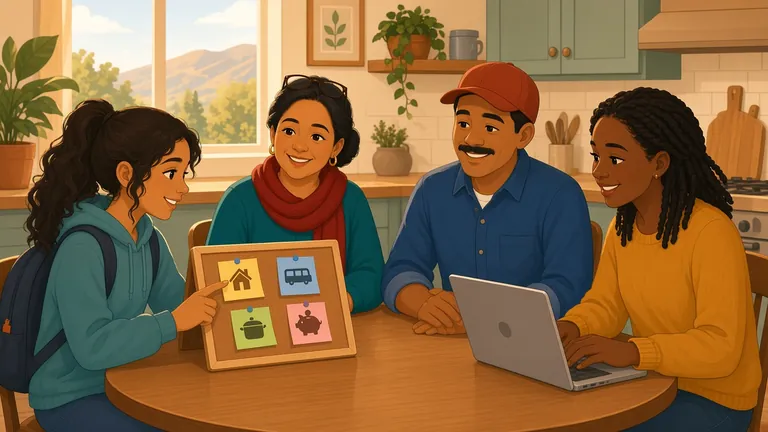
Sofia points to her goals: a home of her own someday, riding the bus, cooking, and handling her money. Her parents listen. The planner writes it down.
Pick one
Traditional or self-directed, side by side
If waiver services are not the right fit, DHW also offers non-waiver State Plan services (service coordination and developmental therapy).
How GemState does it: we support adults who live in their own home or apartment, with a DSP in the home 24 hours a day, one DSP for up to 3 participants sharing a home.
It is not drop-in or hourly care, and we do not provide services in a family member's home. When your young adult is ready for a home of their own, GemState can support them there 24/7.
Sources: Idaho DHW/BDDS Road to Transition guide; IDAPA 16.03.10.703 (Residential Habilitation); DHW: Self-Directed Services.

7 A look ahead
Sofia makes the call
Years later, at the table in her own apartment, Sofia talks a decision through with Rosa and Miguel. They help her weigh the options. Sofia decides.
Two court roles
Guardian or conservator
Both can be full or limited. Ask the court for the narrowest option that meets the actual need.
A law change is coming. Idaho enacted the Uniform Guardianship, Conservatorship, and Other Protective Arrangements Act (SB 1240) in 2026, effective January 1, 2027. It strengthens least-restrictive protections and requires client-directed counsel for unrepresented adults. If you may file in 2027 or later, confirm the process with the court or an attorney.
Sources: Idaho Supreme Court: Guardianship and Conservatorship; DHW: Guardianship and Supported Decision-Making; Idaho Code 66-404 (DD track).
Print this or save it as a PDF, and work through it in the year before the birthday. Ask each Idaho office to confirm current details, since they change.
About GemState. GemState is a DHW-certified Treasure Valley residential habilitation agency: Certificate No. RHA-6337, originally certified July 20, 2026; current certificate effective October 1, 2026 through March 31, 2027, verifiable with the DHW certification unit at 877-457-2815 or DDARH@dhw.idaho.gov.
If you are navigating the move to adult DD services, we are glad to answer transition questions and point you to the right regional office. Contact us.
8 Someday
A home of Sofia's own
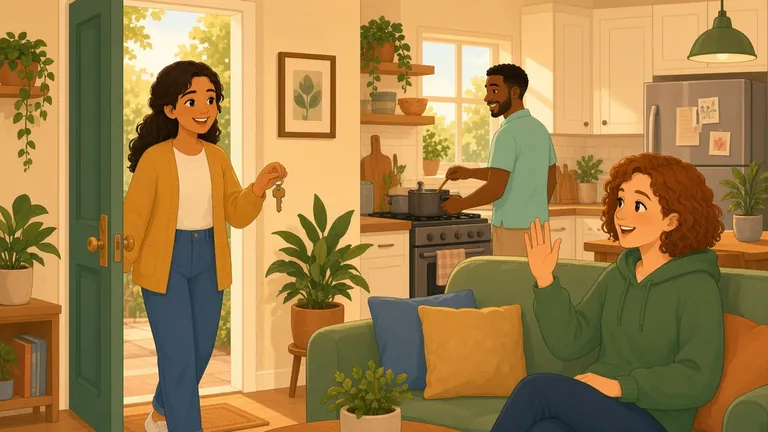
This is a someday picture, not today. At GemState, residential habilitation happens in the participant's own home or apartment, with a DSP like Andre in the home 24 hours a day, one DSP for up to 3 participants. It is not drop-in care.
Sofia unlocks her own door. Jenna waves from the couch, and Andre is already in the kitchen. Rosa and Miguel are welcome visitors in Sofia's home.
Sofia, Rosa, Miguel, Jenna, Andre, and Maya are illustrated characters. Fictional. Facts on this page cite Idaho and federal sources. Confirm details for your situation with your regional DHW office. GemState ResHab explainer series.